
Opening the Cuticle
Softening the surface
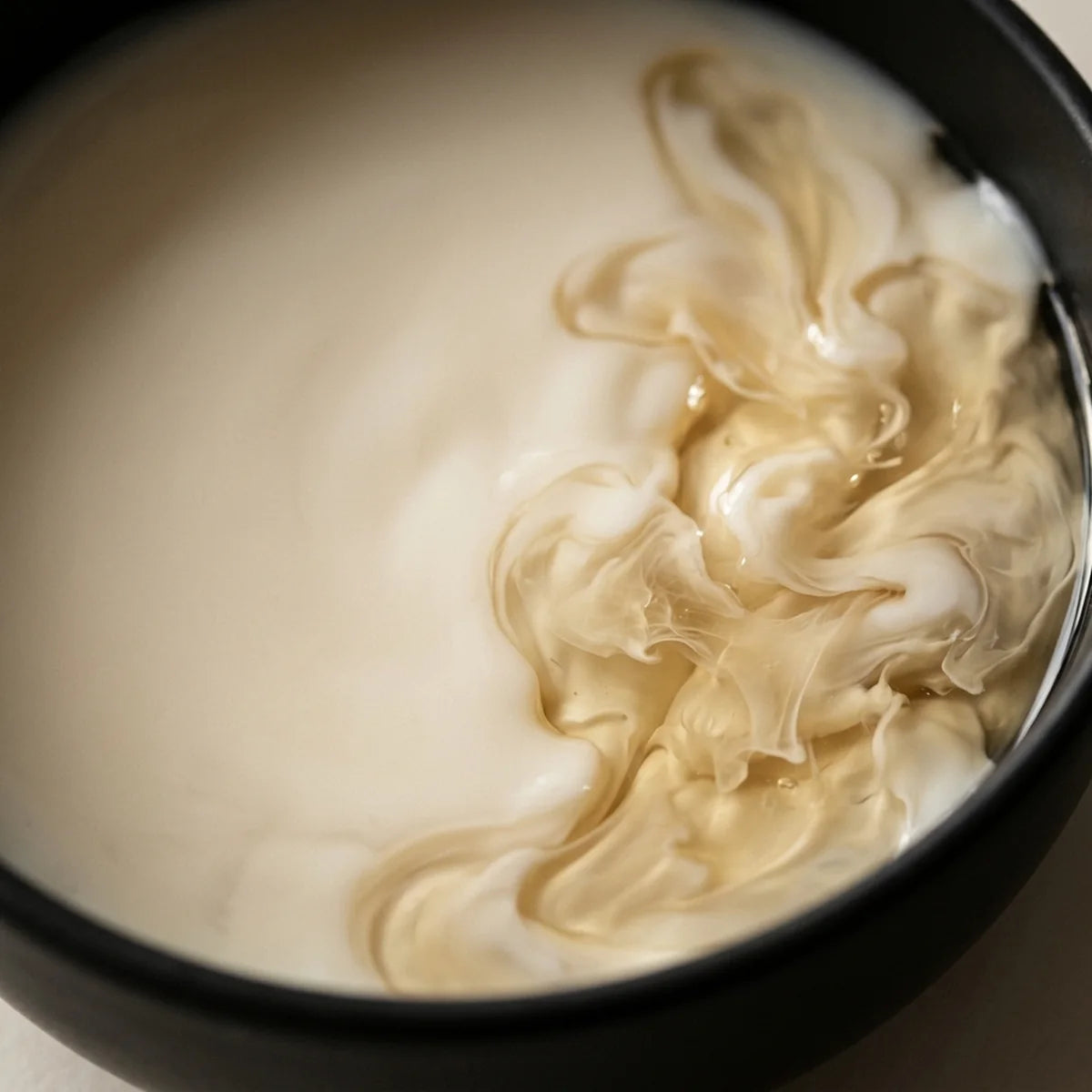
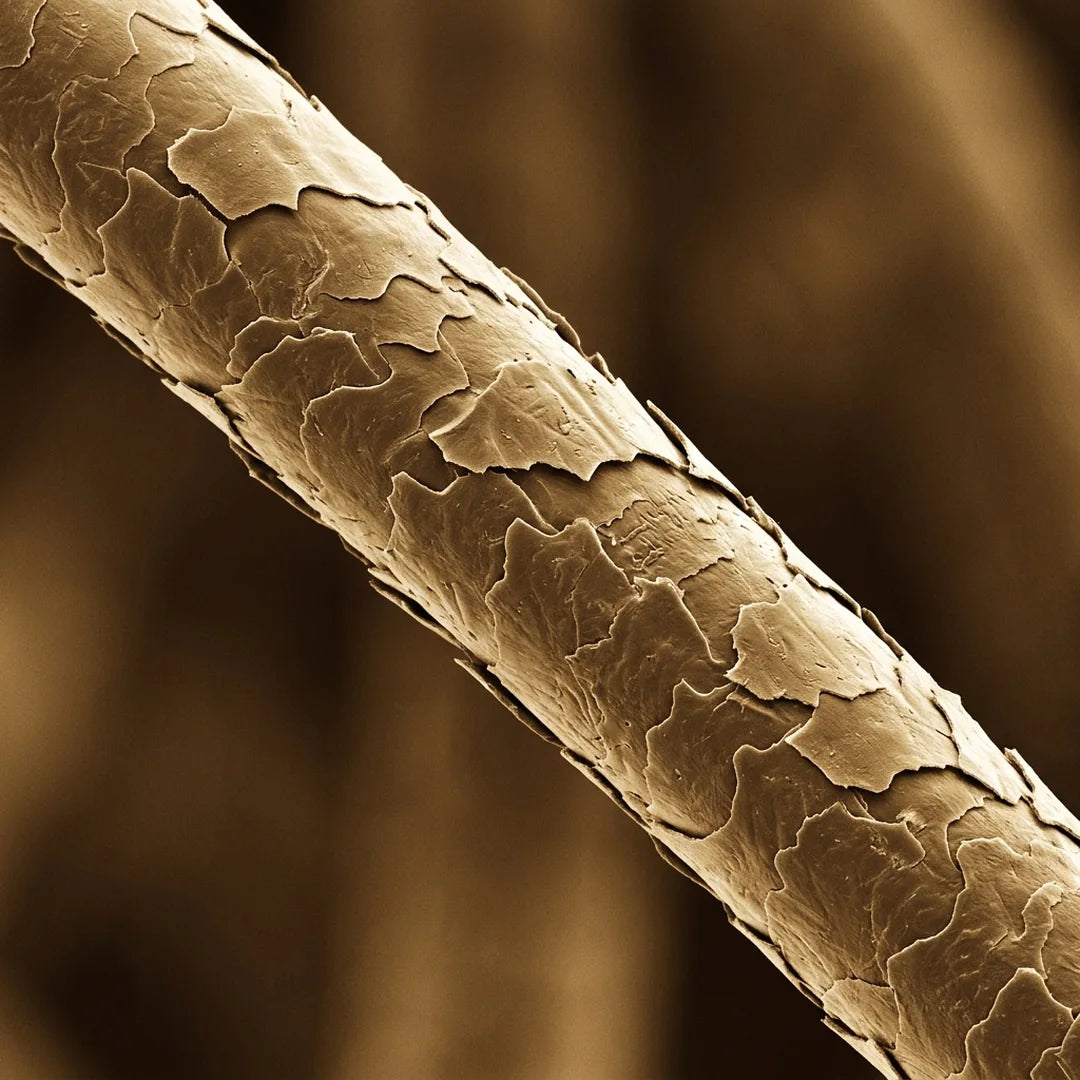
The mask base carries cationic conditioners and shea that relax the outer scale layer, so the shaft stops repelling everything applied to it. Nothing repairs hair that is still closed.
Breaking down the beads
Crushing the beads through the mask releases the actives at the moment of use and thins the mixture just enough for it to flow into the porous sections instead of sitting on top of them.
Reaching the cortex
With the cuticle lifted, hydrolysed fragments small enough to pass between the scales can finally reach the cortex, which is where bleach and heat did the damage in the first place.
Rebuilding the Cortex
Refilling with keratin
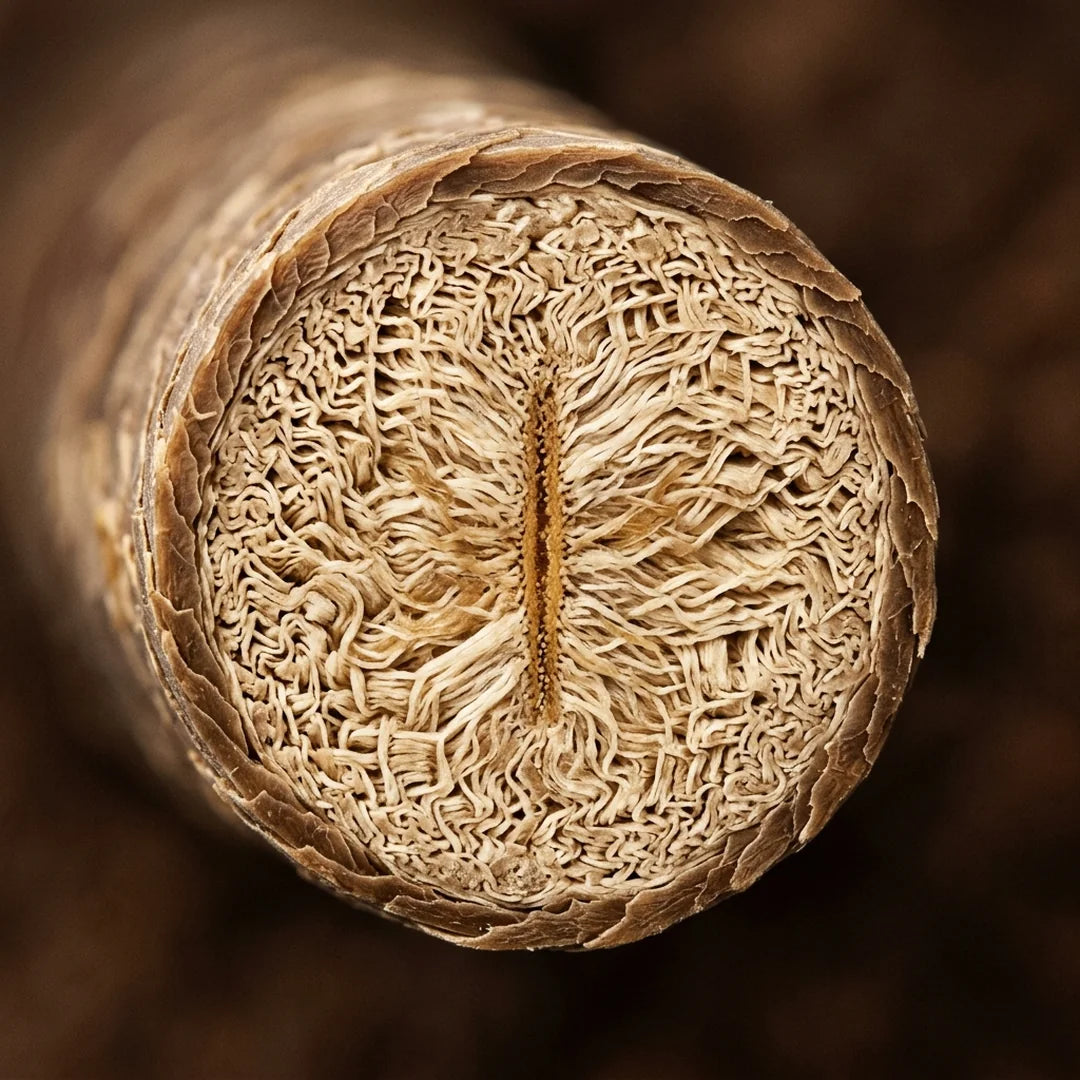
Hydrolyzed keratin occupies the voids left by chemical processing. It is the same protein hair is built from, which is why it integrates instead of simply coating.
Balancing with amino acids
Collagen amino acids and panthenol bind water alongside the protein. Without them a protein mask overloads the shaft and hair turns brittle rather than strong — the classic protein-overload mistake.
Restoring the lipid layer
Sturgeon caviar extract brings the omega fatty acids and fat-soluble vitamins that lightening strips out, returning flexibility so the hair bends instead of snapping.
Sealing the Shine
Laying the cuticle flat
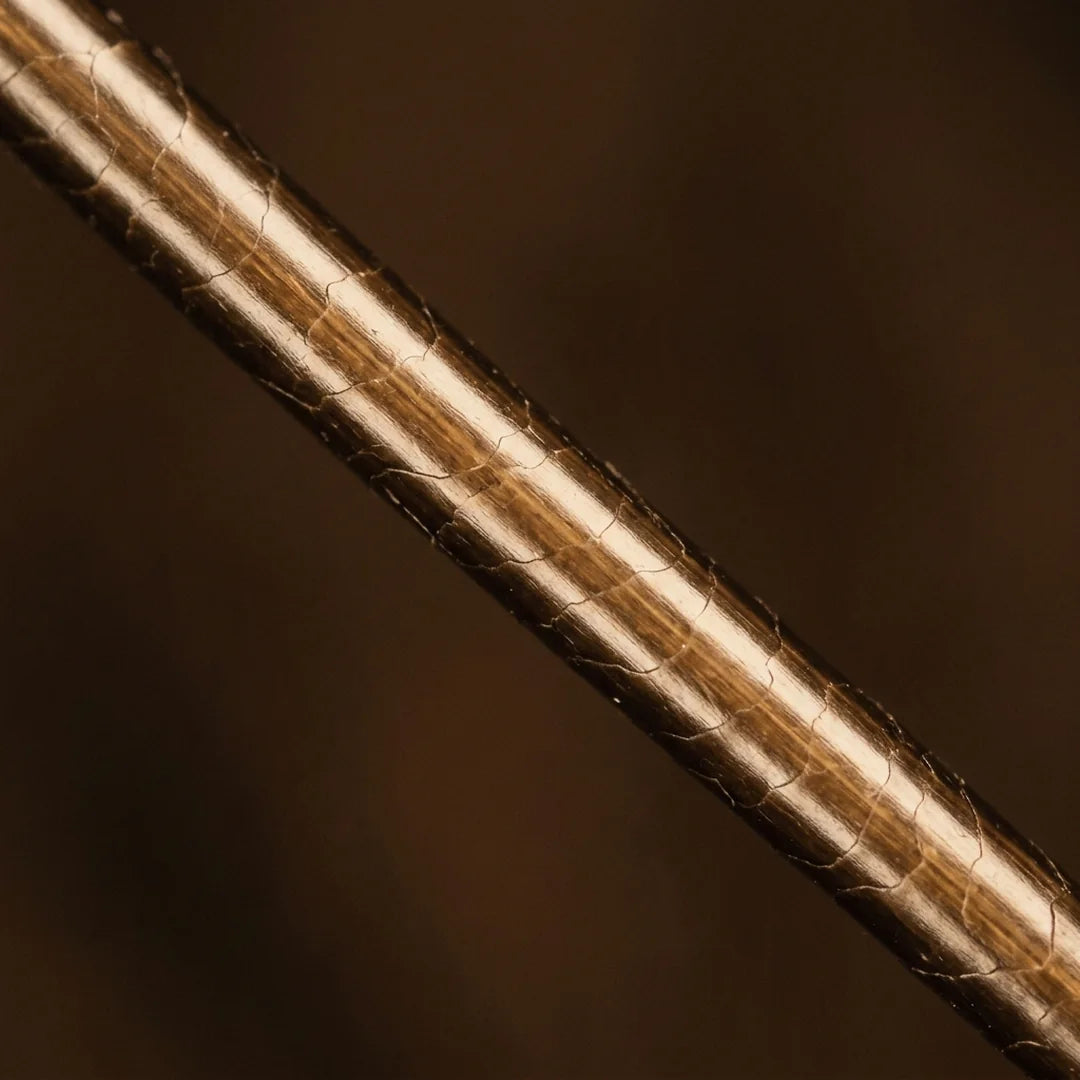
Hydrolyzed silk is smaller and smoother than keratin and settles along the outside of the shaft, flattening the scales into a continuous surface.
Reflecting the light
Shine is not a coating, it is geometry. A flat cuticle reflects light in one direction, which reads as gloss; a raised one scatters it, which reads as dull.
Holding the seal
Rinsing clean leaves the cuticle closed around everything the treatment deposited, and the seal holds through several washes before the next capsule is due.